

Looking for expert help? See our website development company in Delhi.
In today’s digital world, smartphones have completely transformed the way people browse the internet, shop online, interact with brands, and make purchasing decisions. From social media scrolling to online shopping and searching for services, mobile devices now dominate internet usage globally.
As a result, businesses can no longer afford to ignore mobile optimization. A mobile-friendly website is no longer just an optional feature — it has become an essential part of successful online marketing. In 2026, consumers expect websites to load quickly, look visually appealing, and function smoothly across all devices. If a website fails to provide a good mobile experience, users are likely to leave within seconds and move to a competitor.
A mobile-friendly website not only improves user experience but also helps businesses increase website traffic, improve search engine rankings, generate more leads, and boost conversions. Search engines like Google prioritize mobile-optimized websites because they want users to have the best browsing experience possible.
What Is a Mobile-Friendly Website?
A mobile-friendly website is a website designed to work smoothly on smartphones, tablets, and different screen sizes. It automatically adjusts its layout, content, images, and navigation to provide users with a seamless browsing experience.
A responsive website ensures that:
- Text is easy to read without zooming
- Buttons are easy to click
- Images fit properly on the screen
- Pages load quickly
- Navigation remains simple and user-friendly
- Content adapts to different devices automatically
Mobile-friendly websites focus on improving usability, speed, accessibility, and overall user experience for mobile users.
Why Mobile-Friendly Websites Matter in 2026
1. Majority of Users Browse Through Mobile Devices
The number of mobile internet users continues to grow rapidly. Most online shoppers, social media users, and search engine users now browse websites using smartphones.
Businesses that ignore mobile optimization lose a large portion of potential customers because users quickly leave websites that are difficult to use on mobile devices.
A mobile-friendly website helps:
- Increase website traffic
- Improve user engagement
- Reduce bounce rate
- Increase conversions
2. Mobile-Friendly Websites Improve SEO Rankings
Search engine optimization (SEO) is heavily influenced by mobile usability. Google rewards websites that provide a better mobile experience.
Some mobile SEO ranking factors include:
- Mobile responsiveness
- Page loading speed
- Core Web Vitals
- User experience
- Mobile usability
Websites that are not mobile-friendly often rank lower in search engine results pages (SERPs).
Benefits for SEO
- Better Google rankings
- More organic traffic
- Higher visibility
- Improved search performance
- Better indexing
Businesses investing in mobile optimization gain a competitive advantage in digital marketing.
3. Better User Experience Increases Engagement
User experience plays a major role in online marketing success. Visitors prefer websites that are easy to navigate and visually appealing on mobile devices.
A mobile-friendly website improves:
- Readability
- Navigation
- Accessibility
- Interaction
- Customer satisfaction
When users enjoy browsing your website, they spend more time exploring your products and services.
4. Mobile-Friendly Websites Improve Social Media Marketing
Most social media users access platforms like:
- YouTube
When users click on ads or social media links, they expect the landing page to load perfectly on their phones.
If your website is not mobile-friendly:
- Users leave quickly
- Ad performance decreases
- Conversion rates drop
- Marketing budget gets wasted
A responsive website ensures smooth social media traffic conversion.
Key Reasons Why Mobile-Friendly Websites Are Important
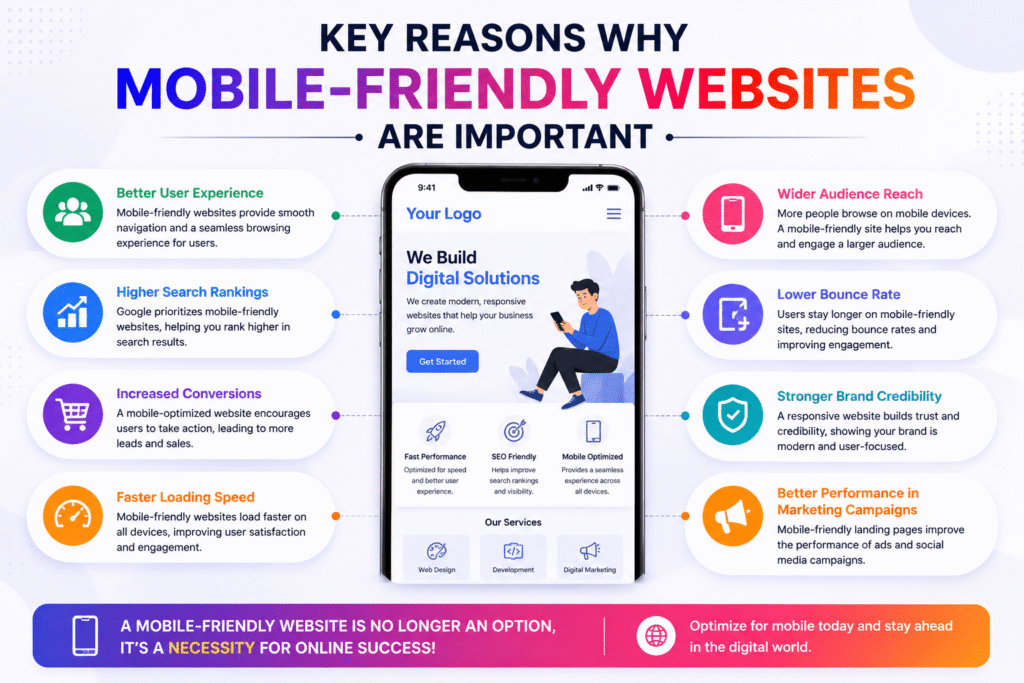
- Increasing mobile internet users
- Better user experience
- Higher Google rankings
- Lower bounce rates
- Improved conversion rates
- Stronger brand credibility
- Better social media traffic performance
- Increased online sales
Businesses that ignore mobile optimization risk losing customers, traffic, and revenue.Mobile Usage Trends in 2026
The digital landscape continues to evolve, and mobile devices now play a central role in online marketing strategies.
Important Mobile Trends
- Mobile Commerce Growth
- Voice Search Optimization
- Mobile-First Browsing
- Social Media Dominance
- Faster Consumer Decisions
How Mobile-Friendly Websites Improve SEO
Search engine optimization plays a major role in online visibility. Google uses mobile-first indexing, meaning it primarily evaluates the mobile version of a website for ranking purposes.
If your website is not mobile-friendly, your search engine rankings may suffer.
Benefits of Mobile Optimization for SEO
- Better Google Rankings
- Faster Page Speed
- Lower Bounce Rate
- Better User Experience Signals
- Improved Crawlability
Google’s algorithm prioritizes websites that provide a smooth mobile experience.
Importance of Responsive Website Design
Responsive design ensures that websites adapt automatically to different screen sizes and devices.
Instead of creating separate desktop and mobile websites, responsive design uses flexible layouts and scalable elements.
Benefits of Responsive Design
- Consistent user experience
- Easier website management
- Better SEO performance
- Cost-effective maintenance
- Improved loading speed
- Enhanced accessibility
Responsive design has become the industry standard for modern websites.
Mobile Optimization Increases Conversion Rates
A conversion occurs when a visitor completes an action such as:
- Purchasing a product
- Filling out a form
- Booking a service
- Sending an inquiry
- Subscribing to a newsletter
Mobile-friendly websites make these actions easier for users.
How Mobile Optimization Improves Conversions
Faster Checkout Process
Quick checkout reduces cart abandonment.
Better CTA Visibility
Clear call-to-action buttons improve engagement.
Improved Trust and Credibility
Professional websites build customer confidence.
Reduced Frustration
Smooth browsing encourages users to stay longer.
Better Product Viewing
Responsive product pages improve shopping experiences. Businesses with optimized mobile websites often experience significantly higher conversion rates.
Common Mobile Website Mistakes to Avoid
Many businesses still make mistakes that negatively affect mobile performance.
Non-Responsive Design
Websites should adapt to all screen sizes.
Slow Loading Speed
Users quickly abandon slow websites.
Small Text Sizes
Text should remain readable without zooming.
Difficult Navigation
Menus should be simple and accessible.
Pop-Ups Blocking Content
Aggressive pop-ups frustrate users.
Unoptimized Images
Heavy images slow down websites.
Avoiding these mistakes can significantly improve website performance.
Why Businesses Should Invest in Mobile Optimization
A mobile-friendly website is not just about appearance — it directly affects marketing success, customer experience, and revenue generation.
Major Benefits of Investing in Mobile Optimization
- Better SEO rankings
- Higher engagement rates
- Increased conversions
- Stronger brand trust
- Improved advertising performance
- Better user satisfaction
- Increased online visibility
Conclusion
In 2026, having a mobile-friendly website is no longer optional for businesses that want to succeed in online marketing. With mobile devices driving the majority of internet traffic, businesses must focus on providing fast, responsive, and user-friendly experiences across all devices.
A mobile-optimized website improves SEO rankings, enhances user experience, increases conversions, supports social media marketing, and builds stronger customer trust. Businesses that invest in responsive website design are better positioned to attract traffic, generate leads, and grow successfully in the competitive digital landscape.
As online marketing continues to evolve, mobile optimization will remain one of the most important factors influencing website performance and business success. Companies that prioritize mobile users today will gain a significant advantage in the future.
If you want to improve your digital marketing results, increase engagement, and grow your online presence, creating a mobile-friendly website should be one of your top priorities.