



Introduction
Search Engine Optimization is a good way to get more people to visit your website. It helps you get found online get people to come to your website and get business.. A lot of people who own businesses and people who are just starting out with marketing do not understand the difference between On-Page SEO and Off-Page SEO.
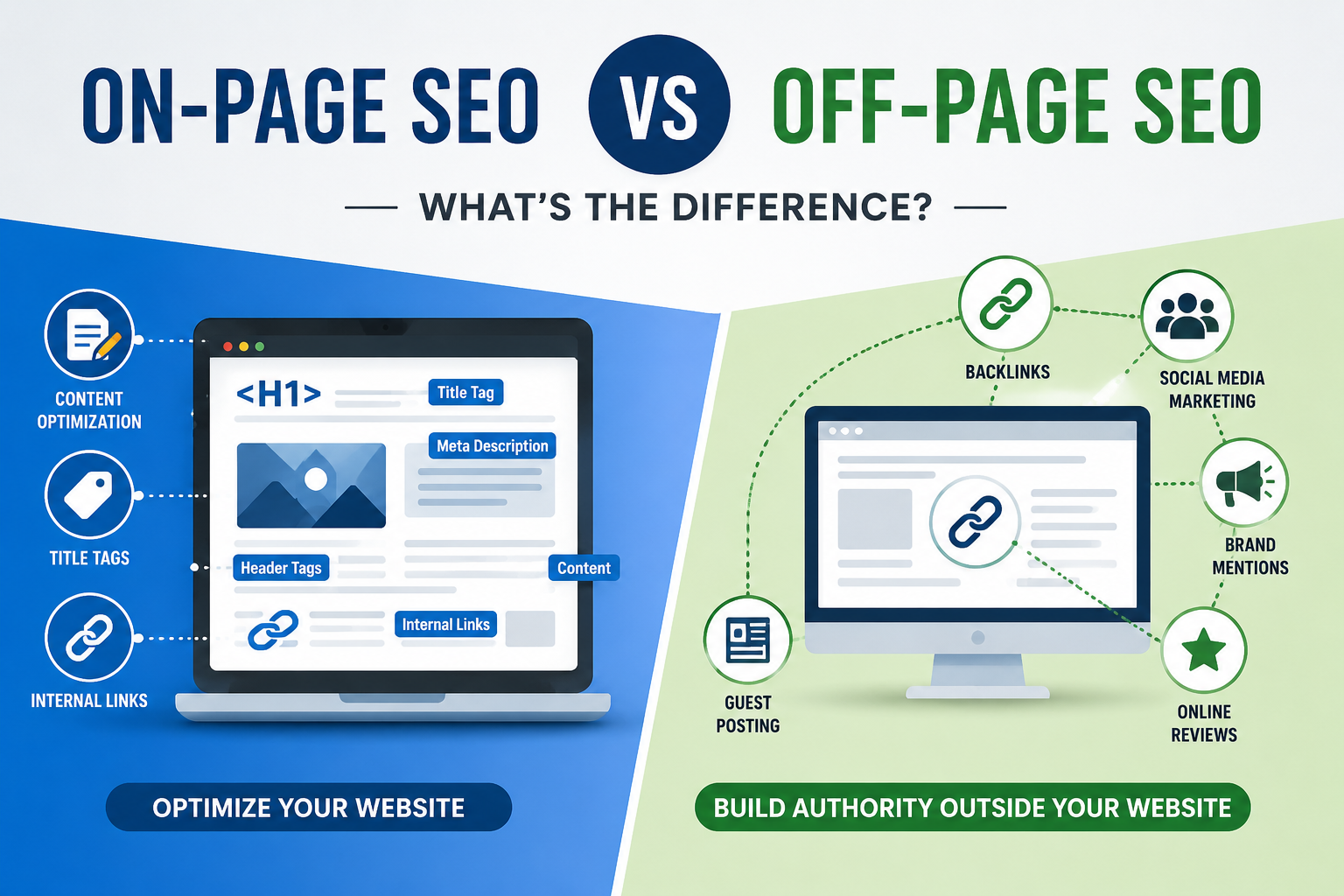
On-Page SEO and Off-Page SEO are both important for Search Engine Optimization to work. They are different though. On-Page SEO is about making your website better. Off-Page SEO is about what you do outside of your website to make it look good to others.
If you know the difference between both you can make a plan that helps your website get found online gets people to visit and makes people happy when they get to your website.
In this guide we will talk about this topic. We will look at how they’re different what is good about them and how they work together to help your website get found online when people search for things, on Search Engine Optimization.
What is On-Page SEO?
On-Page SEO is about making changes to your website pages to help them show up better in search engines. This also makes your site more user-friendly.
It includes things like:
- Improving the content
- Changing the HTML code
- Making your website structure better
- Fixing issues
All these things are things you can control.
The main aim of On-Page SEO is to help search engines get what your content is about. It also makes sure your content is useful and relevant, for people.
Key Elements of On-Page SEO
1. High-Quality Content
Content remains the foundation of SEO. Search engines prioritize websites that provide valuable, relevant, and informative content.
Best practices include:
- Writing original content
- Solving user problems
- Using keywords naturally
- Updating content regularly
- Maintaining readability
2. Title Tags
The title tag is one of the most important ranking factors. It tells search engines what your page is about.
Example:
On-Page SEO vs Off-Page SEO: Key Differences Explained
A well-optimized title should:
- Include the target keyword
- Be under 60 characters
- Encourage clicks
3. Meta Descriptions
Meta descriptions summarize your webpage content in search results.
Benefits include:
- Improved click-through rates
- Better user engagement
- Enhanced search visibility
4. Header Tags (H1, H2, H3)
Headers help organize content and improve readability.
For example:
- H1: Main title
- H2: Main sections
- H3: Subsections
Proper use of headers helps search engines understand content hierarchy.
5. Keyword Optimization
Keywords help search engines identify the topic of your content.
Important areas for keyword placement include:
- Title tag
- URL
- Meta description
- Introduction
- Headings
- Conclusion
However, avoid keyword stuffing, as it can negatively impact rankings.
6. Internal Linking
Internal links connect one page of your website to another.
Benefits include:
- Better navigation
- Improved crawlability
- Increased page authority distribution
7. URL Structure
SEO-friendly URLs should be:
- Short
- Descriptive
- Keyword-rich
Example: yourwebsite.com/on-page-seo-vs-off-page-seo
8. Image Optimization
Optimizing images improves page speed and accessibility.
Best practices:
- Compress images
- Use descriptive file names
- Add alt text
- Choose appropriate formats
9. Mobile Friendliness
With Google’s mobile-first indexing, mobile optimization is crucial.
A mobile-friendly website should:
- Load quickly
- Display correctly on all devices
- Offer easy navigation
10. Page Speed Optimization
Fast-loading pages improve both rankings and user experience.
Ways to improve speed:
- Use a CDN
- Optimize images
- Enable caching
- Reduce code bloat
Benefits of On-Page SEO
Better Search Engine Rankings
Well-optimized pages make it easy for search engines to understand and rank them. This helps your website show up higher in search results.
Improved User Experience
When your content is organized and easy to navigate visitors stay on your site longer. They can find what they need quickly and easily.
Higher Conversion Rates
Optimized pages work better to turn visitors into leads and customers. This means you get sales and growth for your business.
Increased Organic Traffic
Good On-Page SEO brings in visitors who are searching for your services. These users are more likely to be interested, in what you offer.
What is Off-Page SEO?
Off-Page SEO is about doing things outside of your website to make it more important and trustworthy. It is like building a name for your website all over the internet.
Off-Page SEO is different from On-Page SEO because Off-Page SEO is about making your website look good on other websites and places on the internet. Search engines look at Off-Page SEO to figure out if your website is good and if it should be, at the top of the list when people search for something.
They use Off-Page SEO to decide if your website is trustworthy and deserves to be seen by people.
Key Elements of Off-Page SEO
1. Backlink Building
- Backlinks are links from other websites pointing to your website.
- They act as votes of confidence for search engines.
- High-quality backlinks can significantly improve rankings.
Sources include:
- Industry blogs
- News websites
- Business directories
- Educational websites
2. Guest Posting
Guest blogging involves publishing articles on other websites.
Benefits include:
- Building authority
- Generating backlinks
- Increasing brand awareness
3. Social Media Marketing
While social media links may not directly impact rankings, they increase content visibility and traffic.
Popular platforms include:
- X (Twitter)
4. Brand Mentions
Search engines recognize brand mentions even when they don’t include a backlink. Frequent brand mentions increase credibility and trust.
5. Influencer Marketing
Collaborating with influencers can help:
- Expand audience reach
- Increase website traffic
- Generate backlinks
6. Online Reviews
Positive reviews build trust among users and search engines.
Important review platforms include:
- Google Business Profile
- Trustpilot
- Yelp
7. Directory Listings
Listing your business in reputable directories improves online visibility.
Examples include:
- Google Business Profile
- Bing Places
- Local business directories
8. Forum Participation
Engaging in relevant forums and communities can help establish authority.
Examples include:
- Quora
- Industry-specific communities
9. Content Promotion
Promoting content increases exposure and opportunities for natural backlinks.
Methods include:
- Email marketing
- Social sharing
- Influencer outreach
10. Digital PR
Digital Public Relations helps businesses earn mentions and backlinks from authoritative publications. This strategy strengthens website authority and credibility.
Benefits of Off-Page SEO
- Higher Domain Authority is really important for a website. Quality backlinks help to increase the authority of a website.
- Improved Rankings happen when search engines see a website as trustworthy. Search engines think that trusted websites are better.
- Greater Brand Awareness is what you get from Off-Page activities. These activities help your business reach people.
- Increased Referral Traffic is the result of backlinks from websites. These backlinks bring targeted visitors to your website.
- Enhanced Trust and Credibility are built when people say things, about your business. Positive reviews and mentions make people trust your business more.
Which is More Important: On-Page SEO or Off-Page SEO?
This is a question people often ask about SEO.
The truth is, both On-Page SEO and Off-Page SEO are equally important.
Think of your website like a house:
- On-Page SEO builds the structure of the house.
On-Page SEO makes sure search engines understand your website.
- Off-Page SEO builds its reputation in the neighborhood.
Without On-Page SEO search engines get confused, about your content. Without Off-Page SEO your website may not be seen as trustworthy. Your website needs to compete with sites. The best plan uses both. It combines both approaches.
How On-Page and Off-Page SEO Work Together
For maximum results, businesses should integrate both strategies.
Step 1: Optimize Your Website
Start by:
- Improving content quality
- Enhancing page speed
- Fixing technical SEO issues
- Optimizing keywords
Step 2: Build Authority
Next:
- Earn quality backlinks
- Publish guest posts
- Promote content
- Collect customer reviews
Step 3: Monitor Performance
Track important metrics such as:
- Organic traffic
- Keyword rankings
- Backlinks
- Conversion rates
- Bounce rate
Regular monitoring helps identify improvement opportunities.
Common SEO Mistakes to Avoid
Keyword Stuffing
Overusing keywords can harm rankings and user experience.
Buying Backlinks
Low-quality paid backlinks may result in penalties.
Ignoring Mobile Optimization
A poor mobile experience can reduce rankings and conversions.
Publishing Thin Content
Short, low-value content rarely performs well.
Neglecting Link Building
Even excellent content may struggle without strong backlinks.
Future of SEO: Why Balance Matters
Search engines continue to become smarter.
Modern SEO is no longer about simply inserting keywords or building large numbers of backlinks.
Today’s successful SEO strategy focuses on:
- User experience
- High-quality content
- Authority building
- Technical optimization
- Brand trust
Businesses that invest in both On-Page and Off-Page SEO are more likely to achieve sustainable growth and long-term search visibility.
Conclusion
Understanding the difference between On-Page SEO and Off-Page SEO is essential for building a successful digital marketing strategy.
On-Page SEO focuses on optimizing your website’s content, structure, speed, and user experience. Off-Page SEO focuses on building authority, trust, and credibility through backlinks, brand mentions, reviews, and content promotion.
Neither strategy works effectively on its own. A website with excellent content but no authority may struggle to rank, while a website with strong backlinks but poor content may fail to retain visitors.
The most successful businesses combine both approaches to improve rankings, drive organic traffic, and generate consistent leads. By investing in On-Page and Off-Page SEO together, you create a strong foundation for long-term online success.
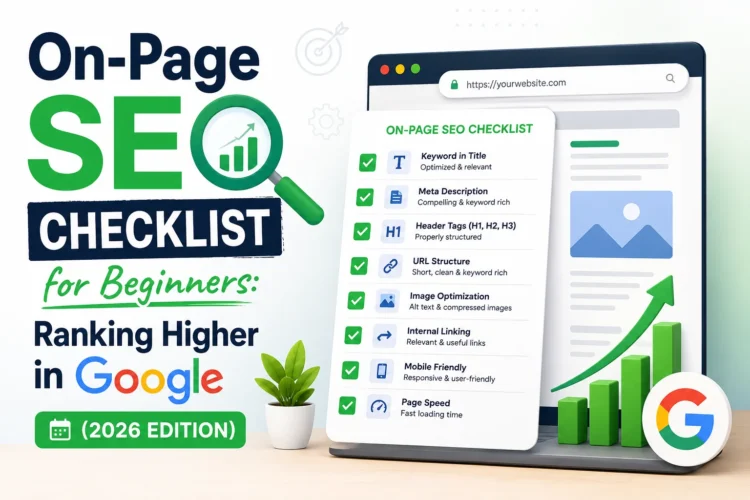
Technical SEO Guide for Beginners: Complete 2026 SEO Checklist
July 2, 2026[…] experience signals like speed and mobile usability) impact rankings directly. A technical and an SEO optimized website not only reduces the bounce rate but also helps to increase engagement and […]