
Looking for expert help? See our Google Ads management services in Delhi.
Introduction
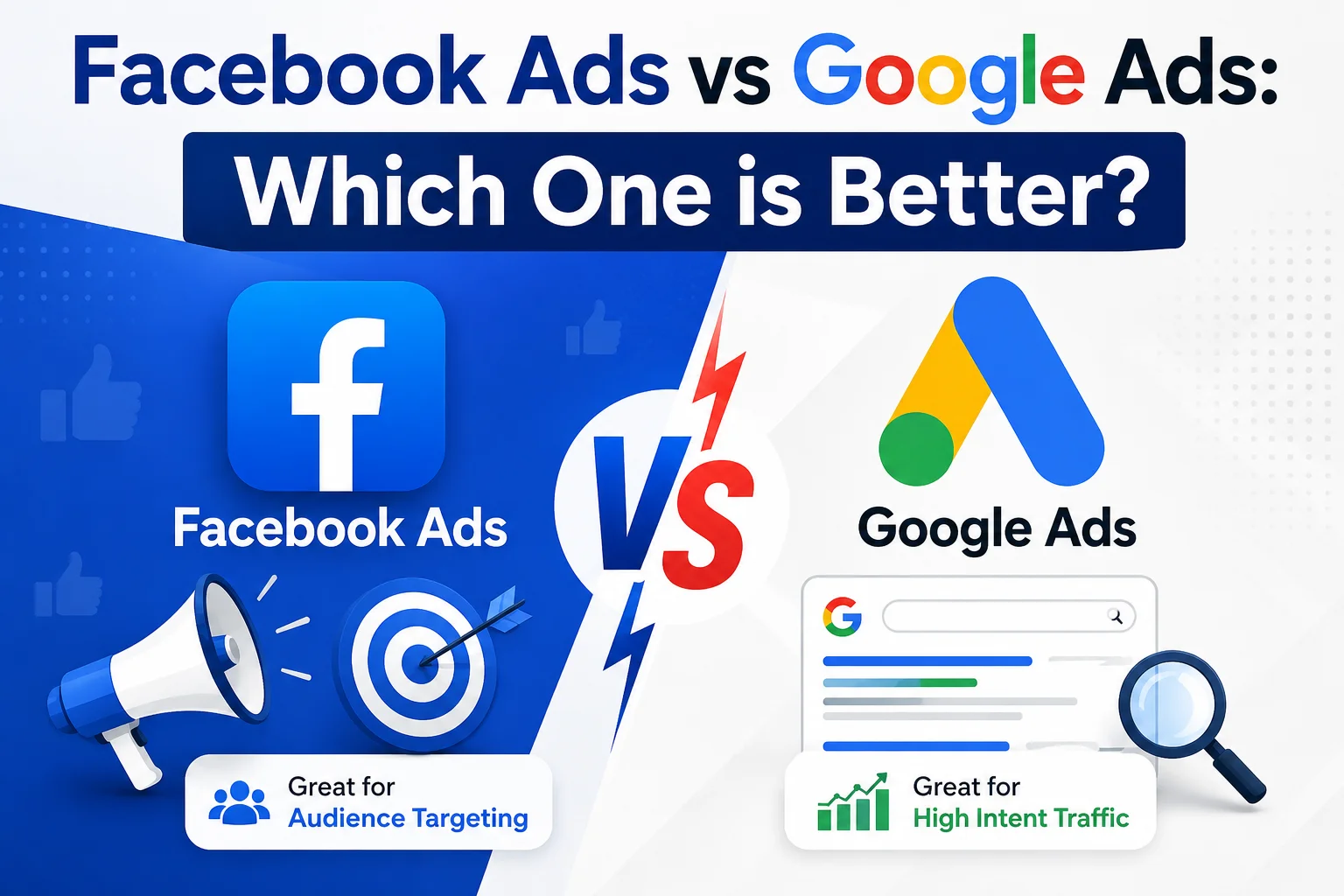
But when a business decides to step into digital marketing, one of the most common questions is Facebook Ads vs Google Ads – which one is better? Both platforms are the titans of the internet advertising landscape and allow businesses to gain leads, grow sales, and build brand recognition. Yet they perform totally differently—and reach buyers at different stages of the buying process.
Selecting the best advertising platform can have a massive effect on your return on investment (ROI). Google Ads and Facebook Ads are both strong methods of marketing that you can use but in different ways. Google Ads are based on the user searching for your product or service, whereas Facebook ads allow you to reach people that may be interested, have similar interests, or online behavior. By knowing the pros and cons of both platforms, you can make better marketing decisions.
This comprehensive guide will compare Facebook Ads and Google Ads, their benefits, cost vs cost per conversion available targeting options any other important metric you might need to know to help you decide which platform is best for your business objectives.
Understanding Digital Advertising in 2026
Digital advertising has changed rapidly over the past few years, Online time spent by consumers searching for products and services with search engines, social media and mobile apps are greater than ever.
Businesses are not dependent on traditional marketing methods anymore. Instead, they try to funnel in the qualified leads through pay-per-click advertising (PPC), social media marketing and search engine marketing (SEM) to generate revenue.
Generally, Google and Facebook continue to be the best platforms for promoting your services among all advertising types, due to their sophisticated audience targeting options and measurable results over time. Difficulty comes in with figuring out which of the 2 is more suitable for your advertising goals.
What Are Facebook Ads?
Facebook Ads are paid ads displayed across Meta platforms such as Facebook, Instagram, Messenger and Audience Network.
Instead, Facebook advertising relies on user information — interests, demographics, online behavior, purchase activity and engagement history to show targeted ads. Unlike search advertising, where you capture demand that already exists, Facebook Ads is a platform focused on creating demand.
In other words, it means that your users will see your ad not only when they are looking for your product or service.
Key Features of Facebook Advertising
One of the strongest features of Facebook Ads is their targeting capabilities:- advertisers can reach specific audiences with ease.
Some key features include:
- Interest-based targeting
- Behavioral targeting
- Custom audiences
- Lookalike audiences
- Video advertising
- Carousel ads
- Lead generation forms
- Retargeting campaigns
These unique features make Facebook ideal for businesses that want to attract attention.
What Are Google Ads?
Google Ads is Google´s online advertising platform which serves ads in the Google Search, YouTube, gmail and Google Maps apps and on millions of partner websites.
Google Ads is all about Intent marketing on search. People search using keywords related to certain products or services, and businesses bid on those keywords in order to be featured within the both organic and paid search results.
So when someone makes a search with the keyword “best digital marketing agency near me,” businesses using Google Ads could land on top of the search results page, and they will show themselves at the top.
Key Features of Google Advertising
Google Ads has a few campaign types:
- Search Ads
- Display Ads
- Shopping Ads
- Video Ads
- Performance Max Campaigns
- App Promotion Campaigns
- Local Service Ads
Google often produces good quality leads and conversions as you are catching users who already have buy intent.
Facebook Ads vs Google Ads: Major Differences
Both platforms assist businesses in taking their advertising online, but they differ significantly in how.
| Feature | Facebook Ads | Google Ads |
| User Intent | Passive | Active |
| Targeting | Interests & Behavior | Keywords |
| Best For | Brand Awareness | Lead Generation |
| Cost Per Click | Generally Lower | Generally Higher |
| Conversion Speed | Longer Journey | Faster Journey |
| Audience Reach | Social Media Users | Search Users |
| Remarketing | Excellent | Excellent |
Perhaps most importantly, user intent is what separates the two. Google is demand capture, Facebook is demand creation.
Audience Intent: The Biggest Difference
When comparing Facebook Ads and Google Ads; knowing the intent of your audiences is essential.
People use google because they have a problem that needs to be solve by visiting this. They are looking for answers, products or services. Which makes them very qualified leads.
Typing buy shoes online is much more likely to indicate an intent close enough to a purchase compared with someone aimlessly scrolling through Facebook for inspiration.
On the contrary, Facebook users are consuming content, communicating with friends or browsing for entertainment. It’s not like they are looking to purchase anything right at this moment.
This is the reason Google Ads get you conversions faster and Facebook Ads are great to nurture your future customers.
Targeting Capabilities Comparison
Facebook’s strength in audience targeting — or what you see, when and why
FB Renters also lets advertisers Target users based directly on:
- Age
- Gender
- Location
- Interests
- Relationship status
- Purchase behavior
- Job title
- Education level
These sophisticated targeting capabilities allow brands to target very particular pockets of customers.
Keywords and search intent are the two main areas of targeting for Google. Google makes audience targeting possible as well, but it shines best at locating those who are already signalling intent to purchase particular products or services.
Facebook has a clear win if precision audience targeting is the most important. If you need drove buy intent, Google wins.
Cost Comparison: Facebook Ads vs Google Ads
One of the most important factors for advertisers when choosing a platform to promote their products is cost.
In general, the cost price per click (CPC) of ads from Facebook is lower than that of Google Ads. But a lower CPC does not always mean better results.
Average Cost Comparison
| Metric | Facebook Ads | Google Ads |
| Average CPC | Lower | Higher |
| Average CPM | Lower | Higher |
| Conversion Intent | Medium | High |
| Lead Quality | Moderate to High | High |
Google Ads are typically more expensive as advertisers bid against each other on high intent keywords. One click may be pricey, but the chance of converting is greater too.
Instead of click-per-cost (CPC) businesses need to talk about cost per acquisition CPA and return on ad spend ROAS.
Google Ads for Lead Generation
Google Ads vs Facebook Leads When the need to generate high quality leads comes certainement Google ads have an upper hand.
Users searching for:
- “SEO agency near me”
- “best CRM software”
- “emergency plumber”
- “digital marketing services”
Are already having the need, and searching for answers.
This translates into lead quality and conversion rates. Google Ads offers great success for service oriented businesses, local businesses, consultants and B2B marketers.
If your business is looking for immediate inquiry, bookings or sales then Google Ads remains very effective.
Facebook Ads for Brand Awareness
Facebook Ads are comparatively good at building brand awareness and interacting with customers.
With beautiful images, videos, reels and carousel ads businesses can promote their products to potential customers that have never heard of your product.
The lookalike audiences and behavioral targeting are parts of the ads model Facebook services to help advertisers discover customers.
If you are startups, new brands or businesses having innovative products Facebook Ads usually the best method for affordable and broad reach.
Facebook brand awareness campaigns can generate demand in the future that ultimately translates into sales.
Which Platform Is Better for E-commerce?
Both platforms provide great value for e-Commerce businesses.
Google Shopping Ads work so well because they show products right in the search results and Customers can compare products, prices and reviews before clicking.
Facebook Ads excel at:
- Product discovery
- Retargeting abandoned carts
- Upselling existing customers
- Cross-selling products
Top e-commerce brands usually do the both.
Google focuses on capturing purchase intent, while Facebook is more about building relationships and driving repeat purchases.
Which Platform Is Better for Local Businesses?
Google Ads helps advertise local businesses a lot.
When someone searches for:
- Dentist near me
- Electrician near me
- Restaurant near me
- Real estate agent near me
Wondering how you can use Google Ads to get customers? Well, this is a short answer: it puts your business in front of people who are ready to buy.
Although Facebook Ads is not a local marketing tool, it can be great for advertising special offers and events as well as audience engagement with your community.
In our experience, much better results with Google Ads (leads are hotter and we get to capitalize on them faster) for local service providers.
Using Facebook Ads and Google Ads Together
Most of the businesses fall into this trap by going with only one platform.
The best marketing strategy is a mix of both.
This is an example of a standard customer journey:
- User discovers a brand through Facebook Ads.
- User visits the website.
- User leaves without purchasing.
- User later searches for the brand on Google.
- Google Ads capture the search and generate the conversion.
The use of multiple channels enhances brand memory and also increases the overall efficacy of marketing campaigns.
Treat Facebook Ads and Google Ads not as adversaries, but rather complementary assets.
Common Mistakes to Avoid
Mistakes that business make cause them to waste their advertising budgets.
Some common errors include:
1. Choosing a Platform Based Only on Cost
Lower CPCs doesn’t guarantee better results
2. Ignoring Landing Page Optimization
Great ads can fall flat on their face if the landing page experience is terrible!
3. Not Using Retargeting
Using retargeted ads is widely believed to increase conversion much better and lower the cost of acquisition.
4. Targeting Too Broadly
Targeted audiences usually are better than broad audience.
5. Failing to Track Conversions
Conversion tracking is something that advertisers always want to evaluate how successful their campaigns are.
Final Verdict: Which One Is Better?
It all depends on what the business wants to achieve.
Choose Google Ads if:
- You need immediate leads.
- You offer local services.
- You target high-intent buyers.
- You want faster conversions.
Choose Facebook Ads if:
- You want brand awareness.
- You have visually appealing products.
- You need advanced audience targeting.
- You want to build customer relationships.
For most businesses, the ideal solution is using both platforms strategically.
Google captures demand, while Facebook creates demand.
Conclusion
There is no ultimate winner when it comes to Facebook Ads vs Google Ads. Both platforms are powerful digital marketing tools serving for different objectives. Google Ads is one of the best channels to target users who are already actively looking for solutions, so it earns its ranking in lead generation and direct sale. In contrast, advertising on Facebook allows businesses to scan relevant people based on specific targeting criteria and subsequently create awareness by engaging with customers as well as creating demand.
The best companies in the world get that digital marketing is not any single platform vs. another. It relates to how the strengths of each platform can be used together to build a comprehensive customer acquisition plan. If you have a larger budget, using Facebook Ads and Google Ads together is the best way to reach customers.