
Looking for expert help? See our Google Ads management services in Delhi.
Introduction
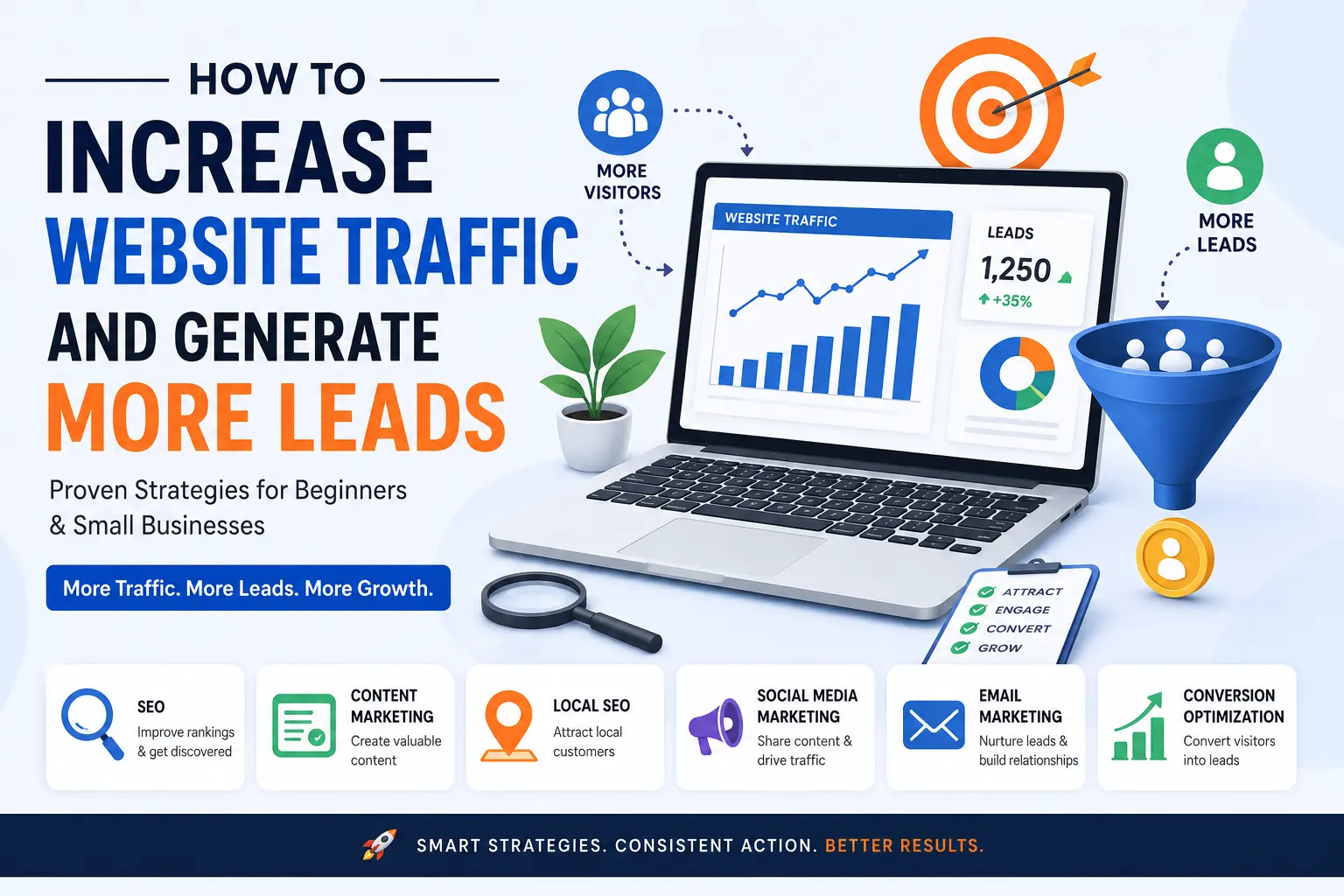
Website alone is not enough in the today competitive online market. It is the second one that gives newbies and small businesses a hard time — getting traffic, well-targeted quality traffic and then making those people pay. The bottom line is If your website very low traffic or less leads, you can miss a business opportunity to grow.
And the best part is you rarely need a huge marketing budget to boost website traffic and leads. When used properly; Small businesses can develop a highly prized base of on line visitors utilizing the proper SEO, content material marketing, and lead era methods.
This blog will show you real, actionable beginner-friendly methods to get more website traffic and leads (even if you are starting from square one).
Why Website Traffic and Lead Generation
Traffic is the number of visitors to your website and leads are interested individuals in any potential buy from you.
Without traffic, your website remains invisible. Without leads, traffic alone does not generate revenue.
Here’s why website traffic and lead generation are essential:
- Improves brand awareness
- Increases business visibility online
- Builds trust and authority
- Creates more sales opportunities
- Helps convert visitors into loyal customers
In fact after-upgrading to paid model, with emotional needs of targeting organic website traffic or qualified leads can helps a lot for beginners and small business who target conversion optimization commitments.
1. Optimize Your Website for Search Engines (SEO)
The most effective method to grow your website traffic for free would be SEO (Search engine optimization)
When someone looks for products or services related to what you offer, SEO allows your website to rank at the top of Google search results.
Use Proper Keyword Research
Start by identifying keywords your target audience searches for.
For example, if you own a digital marketing agency, relevant keywords may include:
- Increase website traffic
- Generate more leads online
- SEO for small business
- Website lead generation
- Organic traffic strategies
These LSI keywords or Latent Semantic Indexing keywords ( the way, search engines recognize your content)
Optimize On-Page SEO
To improve rankings:
- Use your main keyword in the title
- Include keywords naturally in headings
- Add internal links
- Optimize images with alt text
- Write compelling meta descriptions
Good SEO practices increase visibility, bringing in targeted visitors who are more likely to be leads.
Improve Website Speed
Slow websites increase bounce rates.
A fast-loading website improves:
- User experience
- Search rankings
- Conversion rates
- Customer engagement
Using Tools to Detect Performance Issues : The page speed testing platforms 【368†source】 can come in handy here.
2. Create High-Quality Content That Solves Problems
Content marketing is one of the most effective ways to drive website traffic and generate leads.
Google rewards websites that consistently publish useful and valuable information.
Start a Business Blog
Publishing blog content regularly helps you rank for multiple keywords.
Examples of blog ideas:
- Beginner SEO tips
- How to grow a small business online
- Digital marketing strategies for startups
- Website conversion optimization guide
When writing blogs:
- Focus on solving user problems
- Use conversational language
- Add examples
- Include FAQs
This improves user engagement and increases time spent on your website.
Use Long-Tail Keywords
Instead of targeting highly competitive keywords, use long-tail keywords.
For example:
Instead of:
“SEO”
Try:
“SEO tips for small business websites”
Long-tail keywords often have less competition and better conversion rates.
Update Old Content
Refreshing existing blog posts with updated information can improve rankings and bring fresh traffic.
Content updates help Google see your website as relevant and trustworthy.
3. Use Local SEO to Attract Nearby Customers
For small businesses, Local SEO is extremely important.
If people nearby cannot find your business online, you are losing potential customers.
Optimize Your Business Profile
Make sure your business information is accurate:
- Business name
- Contact details
- Website link
- Opening hours
- Location
Encourage customers to leave reviews because positive ratings increase trust.
Use Local Keywords
Include location-based phrases such as:
- Best bakery in Delhi
- Affordable plumber near me
- Local SEO services for small businesses
These keywords help attract highly targeted traffic.
Create Location-Specific Content
You can create blogs focused on your local area.
Example:
“Top Marketing Tips for Small Businesses in Delhi”
This improves your visibility in local search results.
4. Leverage Social Media Marketing
Social media can significantly help increase website traffic.
Platforms such as Facebook, Instagram, LinkedIn, Pinterest, and YouTube allow businesses to promote their website content.
Share Valuable Content
Avoid posting only promotional content.
Instead, share:
- Tips
- Educational posts
- Tutorials
- Customer success stories
- Industry updates
People engage more with valuable information.
Add Website Links Strategically
Always include links back to your website.
For example:
- Blog links
- Service pages
- Landing pages
- Contact pages
This drives referral traffic.
Join Relevant Communities
Facebook groups, forums, and LinkedIn communities are excellent for reaching targeted audiences.
Answer questions genuinely and avoid spamming.
Trust-building leads to more traffic and conversions.
5. Improve Website Conversion Rate
Traffic alone does not guarantee business growth.
You must convert visitors into leads.
Create Strong Call-to-Actions (CTAs)
Use clear CTAs like:
- Get a Free Consultation
- Contact Us Today
- Download Free Guide
- Request a Free Quote
A strong CTA encourages action.
Add Lead Capture Forms
Keep forms simple.
Ask only for important details like:
- Name
- Phone number
Long forms reduce conversions.
Use Landing Pages
Dedicated landing pages increase lead generation because they focus on one goal.
For example:
A page specifically for:
“Free Website Audit for Small Businesses”
This targeted approach improves conversion rates.
6. Invest in Email Marketing
Email marketing remains one of the highest ROI marketing channels.
It helps nurture leads and bring visitors back to your website.
Build an Email List
Offer something valuable in exchange for email signups:
- Free guide
- Discount code
- Checklist
- Webinar
This encourages subscriptions.
Send Helpful Content
Avoid overly promotional emails.
Instead, send:
- Useful business tips
- Blog updates
- Exclusive offers
- Helpful resources
This builds trust and improves engagement.
Automate Follow-Ups
Email automation saves time and improves lead nurturing.
For example:
If someone downloads your free guide, send follow-up emails automatically.
7. Use Paid Advertising Smartly
If your budget allows, paid ads can help generate traffic quickly.
Popular options include:
- Google Ads
- Facebook Ads
- Instagram Ads
However, beginners should focus on high-converting landing pages first.
Running ads without website optimization often wastes money.
Retarget Website Visitors
Many visitors leave without taking action.
Retargeting ads remind them about your business and encourage them to return.
This often improves lead conversion rates.
8. Build Trust and Authority
People buy from businesses they trust.
Add Customer Testimonials
Positive feedback improves credibility.
Real customer reviews increase confidence and encourage inquiries.
Publish Case Studies
Show how your business solved customer problems.
Case studies demonstrate expertise.
Maintain Consistency
Regular updates build trust.
Consistent blogging, social posting, and communication signal reliability.
9. Track Website Performance
You cannot improve what you do not measure.
Track:
- Website traffic
- Bounce rate
- Conversion rate
- Top-performing pages
- Lead sources
Understanding performance helps identify what works best.
Small businesses should focus on continuous improvement rather than overnight results.
Common Mistakes Small Businesses Should Avoid
- Ignoring SEO
- Publishing Low-Quality Content
- No Lead Capture Strategy
- Poor Mobile Experience
- Inconsistent Marketing
Conclusion
If this is the beginning you could be forgiven for thinking about how exactly to get traffic and run leads through your website sounds like a daunting task, but if beginners can realise solid growth then so too with most smaller businesses as long they approach it in the right way.
Focus on things like — SEO, helpful content creation, local or any kind of SEO-friendliness (if you will), conversion optimization and social proof.
Remember, traffic growth takes time. Maybe its just the sheer amount of consistency, high quality content and user focused strategies will help you succeed in the long run.
When you use these techniques on a regular basis, your site can receive more traffic and credibility while converting visitors into strong leads for the business.