Looking for expert help? See our digital marketing services in Delhi.
Introduction
With increasingly growing competition in digital platform, every business requires effective online customer reach. Pay-Per-Click (PPC) advertising is one of the fastest and most trackable digital marketing strategies. Marketing automation tools are designed to make long-term attribution easier, and while that value is easy to get onboard with for either side of the scale (the brand pulls in those valuable leads whilst keeping costs lower than if they hired lots of dedicated marketing personnel), it can still mean a fair amount of extra time per week creating PPC ads or copy.
But what exactly is PPC, and how does it work?
This guide for beginners is an overview that covers the general definition of Pay-Per-Click advertising, its advantages and disadvantages, the PPC types available, what platforms you can use to run your ads on them (including Google Ads which became a monopoly in this market), cost-wise breakdowns when running pay-per-click advertisers requirements along with some strategies & best practices. At the end of this article, you should know everything there is to know about how PPC marketing can help grow your business.
What Is PPC (Pay-Per-Click) Advertising?
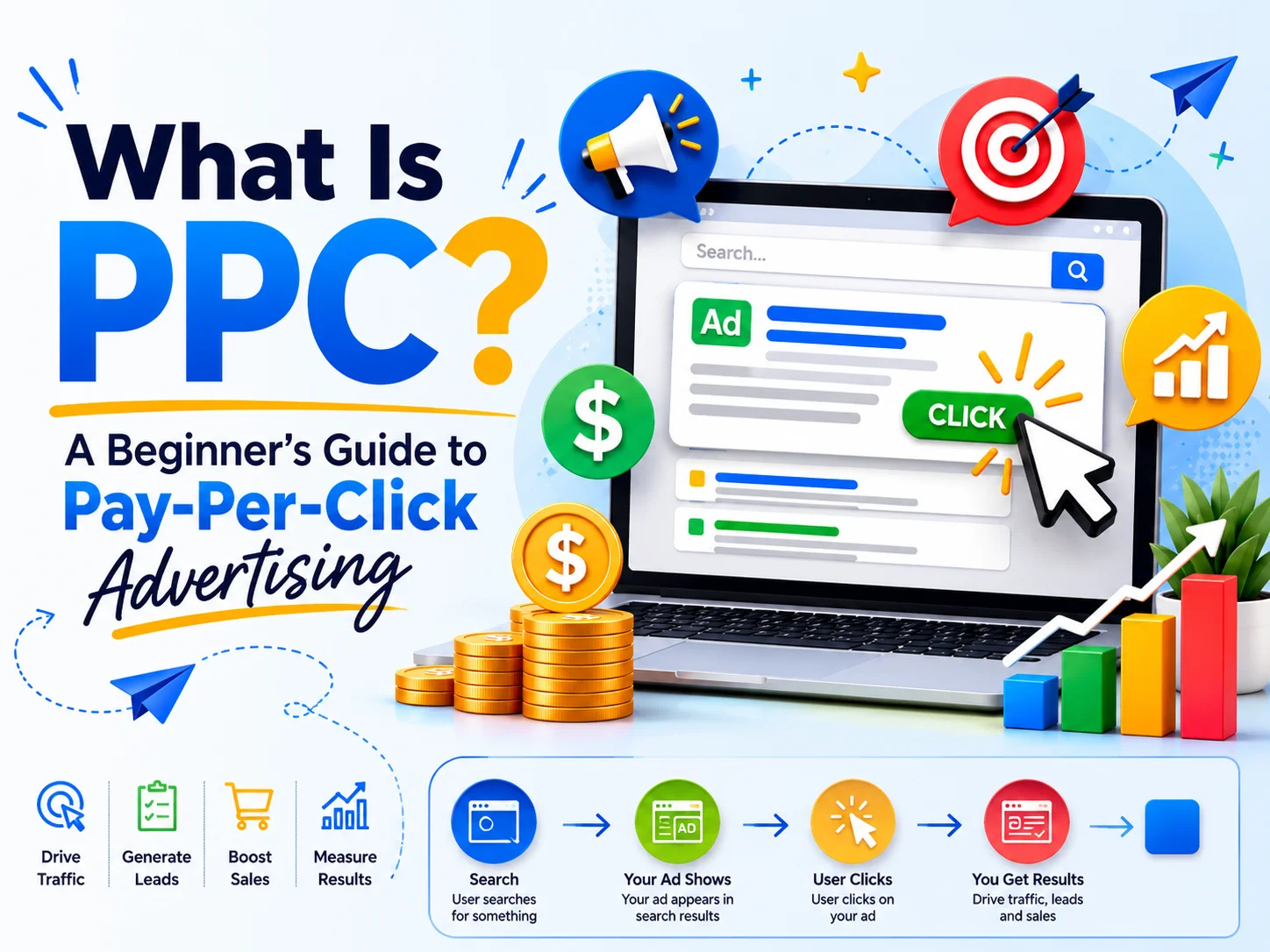
Pay–per-click (PPC) is a catchy online advertising model in which an advertiser pays a fee each time one of their ads is clicked. Rather than gaining visitors to a website organically with the help of Search engine placement (SEO), traffic is purchased by businesses through paid advertisements.
Google Ads is where businesses bid on keywords to promote their products or services. They are displayed at the top of SERPs when users search these keywords.
If your agency is a digital marketing one and you bid on the keyword “best PPC Agency,” then anytime someone searches that term, Google will show an ad with this in it. You only pay when someone clicks your advertisement.
How Does PPC Advertising Work?
Knowing the way PPC works is key to successful campaigns.
The PPC processes usually consist of the following steps:
1. Keyword Research
Advertisers identify keywords their target audience searches for. These keywords trigger ads when users perform relevant searches.
Examples:
- PPC management services
- Google Ads expert
- Digital marketing agency
- Online advertising solutions
2. Creating Ads
Ad copy: Businesses write enticing ad copy that catches the attention of users and gets them to click.
A PPC ad generally includes:
- Headline
- Description
- Display URL
- Call-to-action (CTA)
3. Bidding on Keywords
Advertisers bid for the maximum price they would pay per click.
4. Ad Auction
Whenever a user performs a search, Google runs an auction to determine which ads appear and in what order.
5. Paying for Clicks
You pay only when someone clicks on your ad and not every time it shows.
Why Is PPC Important for Businesses?
PPC advertising has a number of benefits which makes it one of the most efficient digital marketing channels.
Instant Traffic and Visibility
In contrast to SEO, which can take months before you see results, PPC campaigns are capable of driving visitors to your site almost immediately after they have been activated.
Highly Targeted Audience Reach
PPC allows businesses to target users based on:
- Keywords
- Location
- Age
- Gender
- Interests
- Device type
- Browsing behavior
Measurable Results
All PPC digital marketing benefits — Especially, its trackability.
You can measure:
- Clicks
- Impressions
- Conversion rates
- Cost per click (CPC)
- Return on ad spend (ROAS)
Budget Control
Companies can use limited budgets when launching and adjust campaigns throughout their duration based on performance.
Different Types of PPC Advertising
PPC advertising comes in several formats depending on your marketing goals.
Search Ads
Search ads appear at the top of search engine results when users search for specific keywords.
Example:
A user searches “best digital marketing company,” and sponsored ads appear above organic listings.
Best For:
- Lead generation
- Service-based businesses
- Local businesses
Display Ads
Display ads are visual banner advertisements shown across websites in the Google Display Network.
Benefits:
- Brand awareness
- Audience targeting
- Remarketing campaigns
Shopping Ads
Shopping ads display product images, prices, reviews, and store information directly in search results.
Ideal For:
- E-commerce businesses
- Online retailers
- Product-based companies
Video Ads
Video PPC advertisements appear on YouTube and other video platforms.
Benefits:
- Higher engagement
- Brand storytelling
- Increased awareness
Remarketing Ads
Remarketing targets users who have previously visited your website but did not convert.
These ads remind users about your products or services and encourage them to return.
Popular PPC Advertising Platforms
Google Ads
Google Ads is the largest and most popular PPC advertising platform.
Benefits include:
- Massive audience reach
- Advanced targeting options
- Flexible budgeting
- High-intent traffic
Microsoft Advertising (Bing Ads)
Microsoft Advertising allows businesses to target users on Bing, Yahoo, and partner networks.
Advantages:
- Lower competition
- Lower CPC
- High-quality traffic
Facebook Ads
Facebook PPC campaigns allow businesses to target users based on demographics, interests, and behaviors.
Ideal for:
- Brand awareness
- Lead generation
- E-commerce sales
LinkedIn Ads
LinkedIn PPC advertising is especially effective for B2B marketing.
Best for:
- Professional services
- SaaS companies
- Corporate lead generation
Understanding PPC Metrics and Terminology
To succeed with PPC, beginners should understand key performance metrics.
Cost Per Click (CPC)
The amount you pay for each click on your ad.
Formula:
CPC = Total Cost ÷ Total Clicks
Click-Through Rate (CTR)
CTR measures how many users click your ad after seeing it.
Formula:
CTR = Clicks ÷ Impressions × 100
A higher CTR generally indicates relevant ad copy.
Conversion Rate
Measures how many users complete a desired action.
Examples:
- Form submissions
- Purchases
- Phone calls
- Newsletter signups
Quality Score
Google evaluates ads based on:
- Keyword relevance
- Landing page quality
- Expected CTR
A higher Quality Score can lower advertising costs.
Return on Ad Spend (ROAS)
ROAS measures campaign profitability.
Formula:
ROAS = Revenue Generated ÷ Ad Spend
How to Create a Successful PPC Campaign
Conduct Thorough Keyword Research
Use tools like:
- Google Keyword Planner
- SEMrush
- Ahrefs
- Ubersuggest
Focus on:
- Commercial intent keywords
- Long-tail keywords
- Low-competition opportunities
Write Compelling Ad Copy
Your ad should:
- Address user intent
- Highlight benefits
- Include target keywords
- Feature a strong CTA
Example CTA:
“Get Your Free PPC Consultation Today.”
Optimize Landing Pages
Even the best ads fail if the landing page performs poorly.
Landing pages should include:
- Fast loading speed
- Mobile responsiveness
- Clear headlines
- Strong call-to-action
- Trust signals
Use Ad Extensions
Ad extensions improve visibility and click-through rates.
Examples:
- Call extensions
- Location extensions
- Site link extensions
- Review extensions
Monitor and Optimize Campaigns
Regular optimization is essential.
Track:
- CPC
- CTR
- Conversion rate
- Cost per acquisition (CPA)
Pause underperforming keywords and scale successful ones.
Common PPC Mistakes Beginners Should Avoid
Ignoring Negative Keywords
Negative keywords prevent ads from appearing for irrelevant searches.
Example:
A premium agency may exclude keywords like “free PPC services.”
Sending Traffic to the Homepage
Always direct users to relevant landing pages.
Not Tracking Conversions
Without conversion tracking, it’s impossible to measure campaign success.
Choosing Broad Keywords Only
Broad keywords often attract irrelevant clicks and waste budget.
Focus on targeted, high-intent keywords.
Neglecting Mobile Users
Most searches now occur on mobile devices.
Ensure:
- Mobile-friendly landing pages
- Fast page speed
- Easy navigation
PPC vs SEO: What’s the Difference?
| PPC | SEO |
|---|---|
| Immediate results | Long-term results |
| Paid traffic | Organic traffic |
| Requires ad budget | Requires content and optimization |
| Instant visibility | Gradual growth |
| Highly measurable | Sustainable traffic |
The best digital marketing strategy often combines both PPC and SEO for maximum online visibility.
Is PPC Worth It for Small Businesses?
Absolutely.
PPC offers small businesses the opportunity to compete with larger companies by targeting specific audiences and controlling advertising budgets.
Benefits include:
- Faster lead generation
- Local business visibility
- Better targeting
- Scalable growth
- Measurable ROI
PPC is known to become one of the highest-performing marketing channels when done right for businesses of all sizes.
Conclusion
Pay-Per-Click advertising is one of the most powerful digital marketing strategies available today. It enables businesses to reach highly targeted audiences, generate qualified leads, and achieve measurable results quickly.
Success begins with keyword research and ad creation; bidding strategies, landing page optimization for beginners-campaign tracking. From Google to Facebook and LinkedIn ads, the key is constant testing & optimization in order to maximize return on all your campaigns.
Online competitive is getting stiff day by day, any business with an expertise of PPC will have higher preference among the customers and that would lead to a hike in revenue.
If you’re looking for faster visibility, targeted traffic, and measurable business growth, PPC advertising is a smart investment worth considering.